Newsletter Signup

Find vacation packages, news, contests & special offers in our free newsletter!
Close

Member Login

Logging In
Invalid username or password.
Incorrect Login. Please try again.

Not a member? Register Now!

Signing up helps us keep offensive content off of our site. Take a moment to register or click here to learn more about our privacy policy

Dominican Republic

Your guide to Dominican Republic weddings and honeymoons, including wedding requirements, where to stay and what to do.

Dominican Republic Photo Gallery: Wedding and Honeymoon Attractions

Overview

Collapse

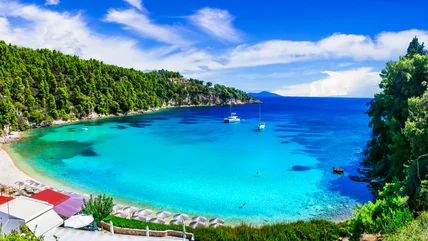
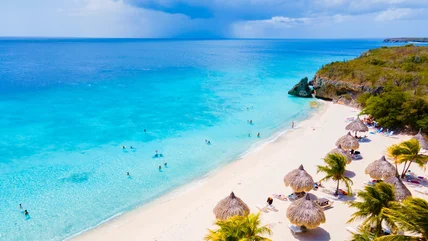
This island paradise, sandwiched between Jamaica and Puerto Rico, offers the ambiance of its more visited neighbors in an affordable, low-key setting. The sheer variety of locales is one of the major draws here, where everything from idyllic beaches and waterfalls, to tropical rainforest and the highest mountains in the Caribbean keep you interested. The prices, of course, go up in the winter months, but in the Dominican Republic, you can often snag a balmy setting for a lower price than on other isles. 

Wedding Requirements There is no waiting period or residency requirement to marry in the Dominican Republic. You do, however, need to write the American Consulate in Santo Domingo prior to your wedding date to ask permission to marry in a civil ceremony. It is recommended that you start this process early (a few months before the wedding date) because the required documents, including original copies of your birth certificates and a Single Status Affidavit, must be translated into Spanish. You can do this at the closest Dominican Consulate in the U.S., which can also legalize your Single Status Affidavit (this takes about 2-3 days). Your documents can be sent by mail if you include a pre-paid envelope for their return. When you arrive for the ceremony, you will also need a valid passport with your latest entry stamp and two witnesses with photo identification. For more info, visit godominicanrepublic.com.

What to Do

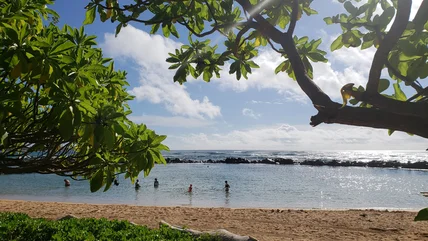
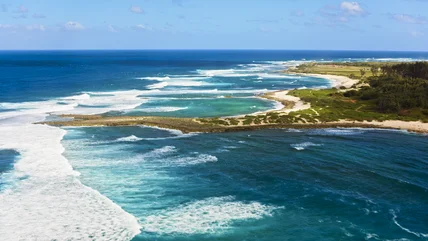
Punta Cana and Cabarete With its wide swaths of sand and reef-protected waters, the Costa del Coco (Coconut Coast) near Punta Cana is one of the fastest-growing beach areas, and home to many larger all-inclusive resorts. These resorts are where most of the action happens, but you can still find some out-of-the-way beaches on this stretch, like Cortecito, with its smaller restaurants and bars. On the North Coast, beaches like Cabarete are where travelers go to get active. With an abundance of wind and waves, this coast caters to kite surfers, windsurfers and the like withs maller hotels and a lively string of funky beach bars.

Whale Watching The waters off the coast of the Dominican Republic are a natural breeding ground for Humpback whales, who return here each year between December and April. The migration brings thousands of whales to the area, particularly in Samana Bay, where several tour operators can take you on a full- or half-day excursion to see the excitement. The Peninsula de Samana has a stronger European influence, having been historically controlled by the Spanish, British, and French (Napoleon himself, actually). But it also has some of the most untouched natural beauty (think swaying coconut palms, cool rivers, sparkling-blue sea) on the island.

Puerto Plata Fort San Felipe, in Puerto Plata is one of the oldest forts in the New World. Built by Philip II of Spain 1564, it was a nearly impenetrable fort complete with solid rock walls, moats and deadly swords hidden in the coral beneath the waterline. It was eventually used as a prison, but in the early 1970s it was restored to its former glory and opened to visitors.

La Romana The charming village of Altos de Chavon is a replica of a 16-century Mediterranean village that overlooks the Chavon River in La Romana. Quaint cobblestone paths lead to galleries, studios, restaurants and workshops that make up this Caribbean art center, which is also home to a design school and an archeological museum. The Church of St. Stanislaus (you can actually marry here as well) is the center of the main square, and the 5,000-seat open-air amphitheater has hosted everyone from Gloria Estefan and Carlos Santana to local music festivals.

Off the Beaten Path

Jarabacoa Head into the hills to the town of Jarabacoa, passing sugar plantations and coffee farms for a glimpse of the real DR. Jarabacoa has long been a summer retreat for Dominicans, and the pine forests, rivers and waterfalls (complete with rapids that are great for rafting), offer a nice contrast to the tropical setting below. Hike to the top of Pico Duarte (at just over 10,000 feet it's the highest peak in the Caribbean), go horseback riding or take in one of the nightly baseball games on the local field Calle la Confluencia. — Jackie D'Antonio

Where to stay

image-

Digital Edition Subscriptions

  • Click here for the digital version
  • Click here for the iPad version